
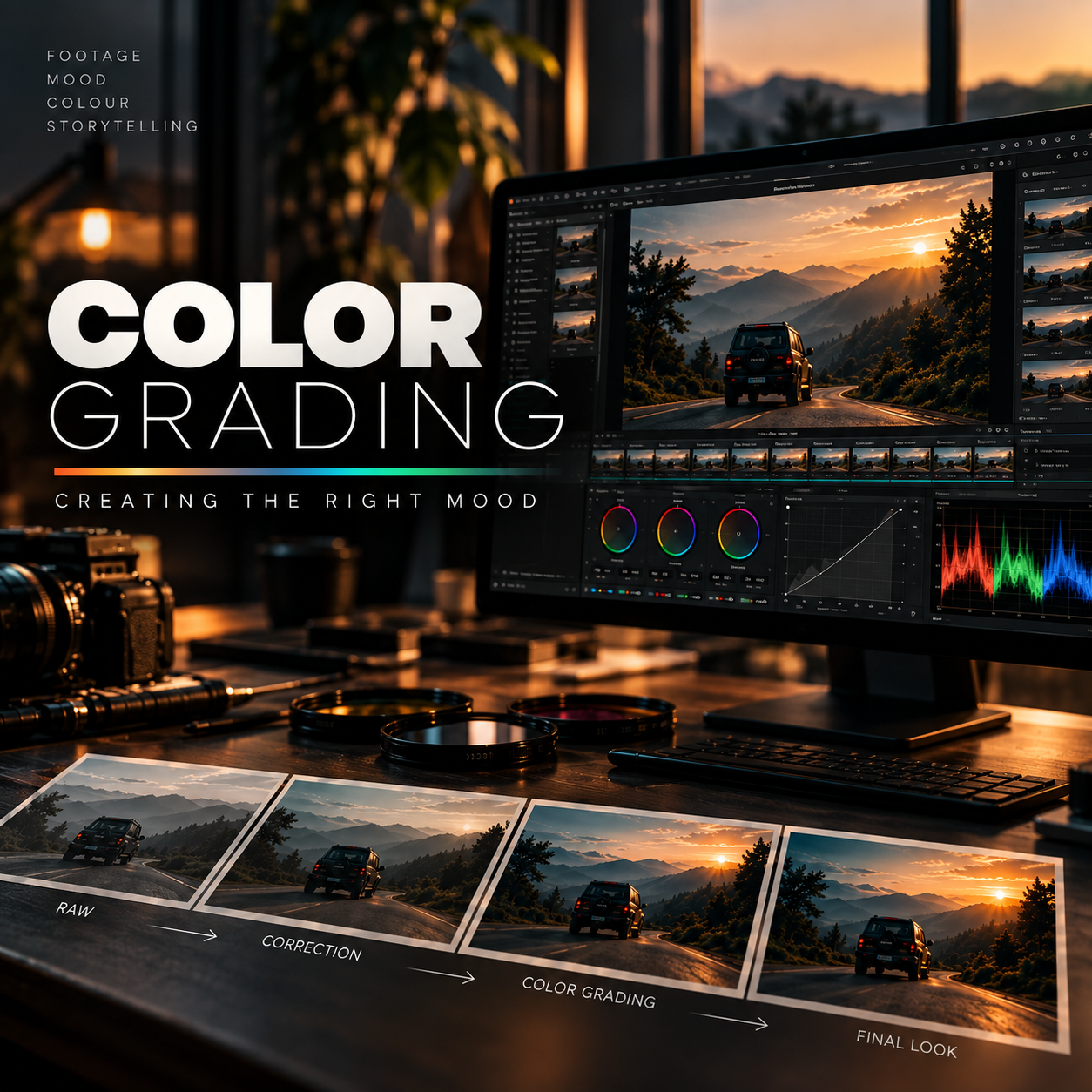
Color grading is one of the most important steps in turning a good video into a visually engaging one. It allows filmmakers and editors to shape the mood, atmosphere, and visual identity of a scene. While color correction focuses on creating accurate exposure, white balance, and natural skin tones, color grading is about adding a creative look. Warm tones can create a feeling of comfort and nostalgia, while cooler tones can give a scene a calm, dramatic, or mysterious atmosphere. A good grade should complement the story without making the footage look unnatural. Understanding contrast, highlights, shadows, saturation, temperature, and color balance helps create a consistent look across different shots. Whether you’re working on a cinematic film, brand video, automotive reel, or social media content, thoughtful color grading can make your visuals more memorable.
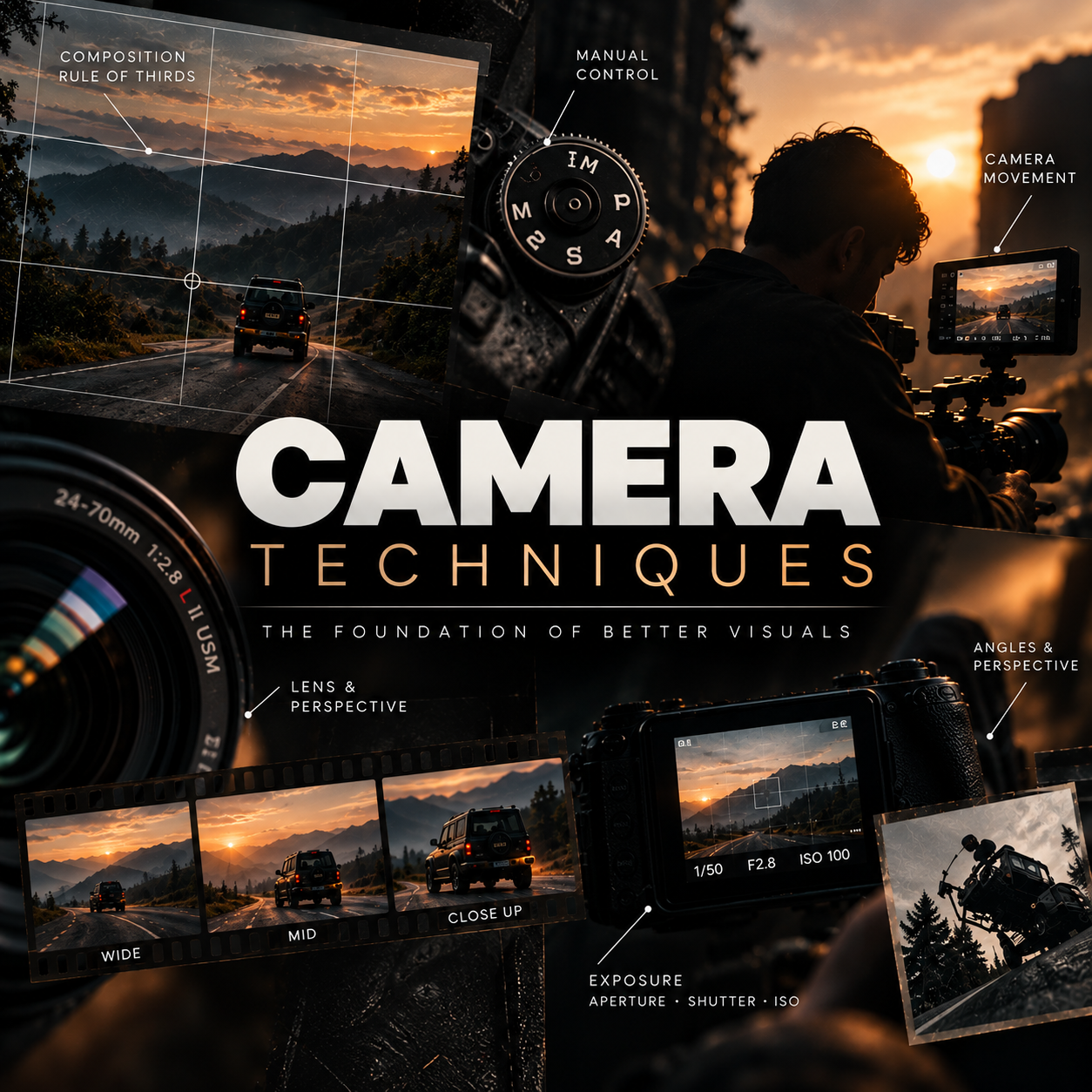
Camera Techniques: The Foundation of Better Visuals
Great visuals are not only about having an expensive camera. Understanding the right camera techniques can make a simple shot look cinematic, professional, and engaging. One of the most important techniques is composition. Using the rule of thirds, leading lines, symmetry, and framing can help guide the viewer’s attention to the subject. Camera movement also plays a major role in storytelling. Smooth movements such as pans, tilts, tracking shots, and push-ins can add energy and emotion to a scene. Even a simple handheld shot can feel powerful when used intentionally. Understanding exposure and focus is equally important. Adjusting shutter speed, aperture, and ISO allows you to control brightness, motion blur, and depth of field. Using manual focus or focus tracking can also help keep the subject sharp throughout the shot. Finally, experiment with different angles and perspectives. Low angles, high angles, close-ups, and wide shots can completely change how a scene feels. Mastering these basic techniques takes practice, but they can make a noticeable difference in your photography and videography. The camera is only a tool—the real skill is knowing how to use it to tell a story.